

3.2.1. The Fountain of Youth
The Fountain of Youth consists of six exercises, performed as a kind of ritual in the form of daily repetitions. We begin with five repetitions, adding two repetitions every week, until - in three months - we reach full 21 repetitions of all exercises daily. The exercises were formed in the beginning of the 20th century by the Tibetan lamas, and today they are very valued around the world. A therapist does not have to master the whole number of repetitions. It suffices that he starts with a low number of repetitions, and that he performs them every day with sensitivity and without exaggeration.
A regular and correct exercising of the Fountain of Youth stabilises the functioning of the chakras. Regardless of the therapist’s age, the psychophysical state of a healthy twenty-five year old gets established.
This ritual has the function of rejuvenation, it revitalises the body’s energy, removes extra kilograms, strengthens the immune system, and cleanses and fortifies the body and the spirit. When regularly doing these exercises, old and middle-aged people change: they change their behaviour, become stronger and of fresh spirit.
Six Exercises of the Fountain of Youth Ritual
Before we start the ritual, we must understand every exercise well and do it correctly and with sensitivity. We must not worry if we do not perform the exercise correctly, as we are mere beginners. With daily exercise, we will learn to do each asana correctly.
The fourth exercise is quite hard. In the beginning, it is enough to lift the body at least slightly. I propose that you only do the sixth exercise once daily or once weekly, or that you do not do it at all, because of the effect created by the vacuum in the lungs.
Practice has shown that it is the most appropriate to do the first exercise, spinning around one’s axis, as the last, fifth one. Since spinning results in dizziness, this exercise is very appropriate as preparation for the meditation of encountering the guide.
1. Spinning around one’s axis
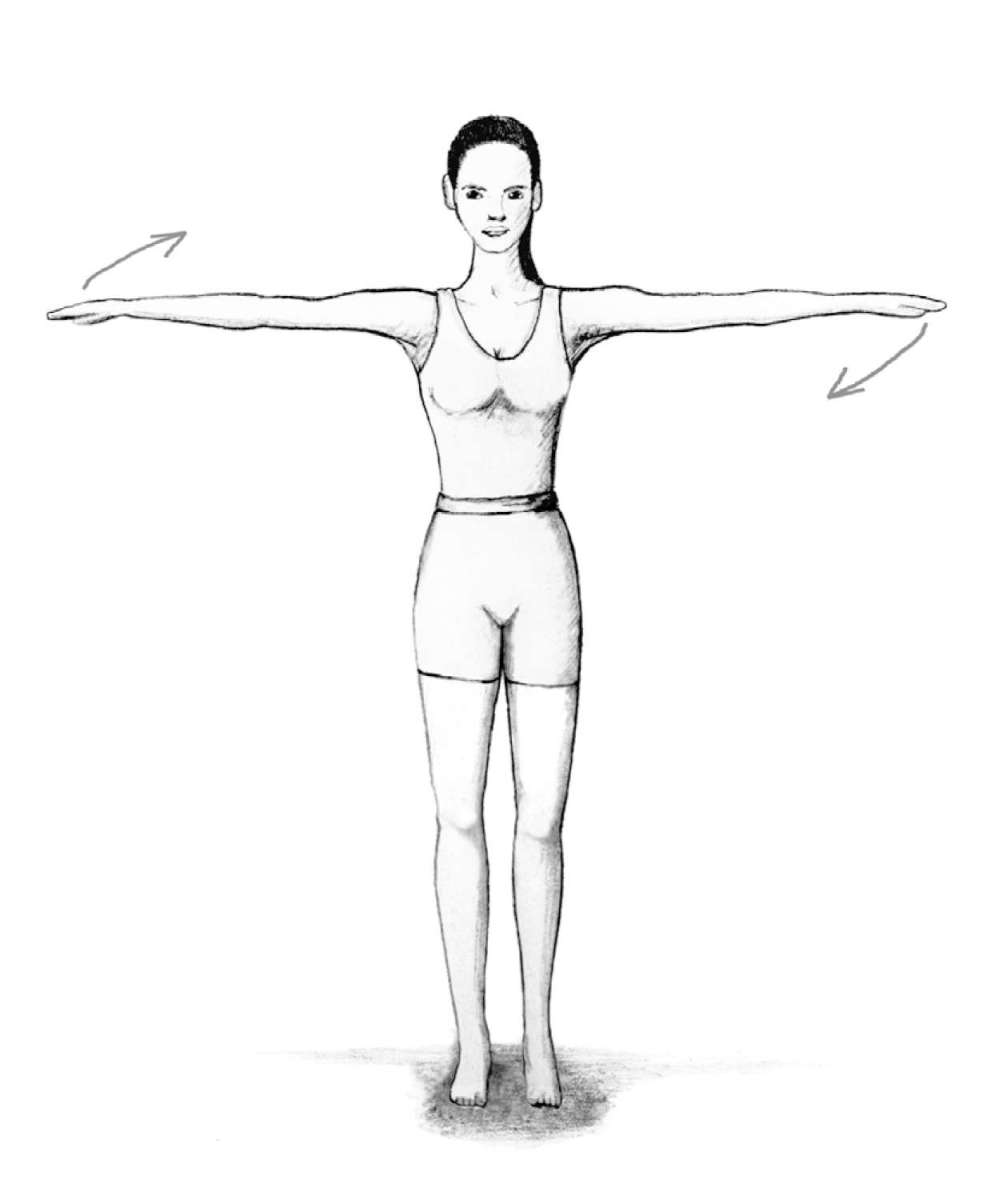
a) Stand up straight, arms stretched out sideways and horizontally, palms open facing downwards.
b) Spin clockwise, from the left to the right. With this exercise we stimulate the flow of energy in our body.
c) Breathe normally. During a spin inhale and exhale, or inhale during one spin and exhale during the next one.
2. Lifting of legs
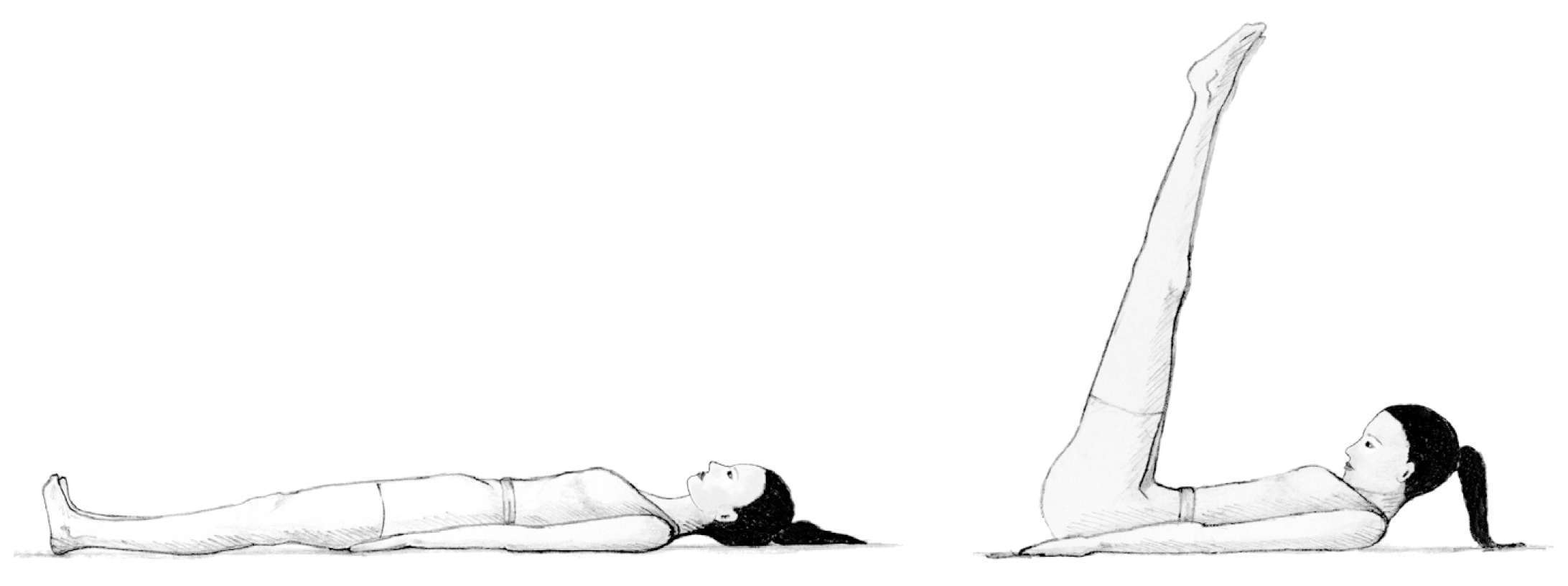
a) Lie flat on our back, with arms by our side. The palms are on the floor, the fingers together and stretched out.
b) Simultaneously lift your legs and head, with the body staying on the floor. Lift your head, tucking in the chin against the chest. The legs and feet are stretched out. Lift them to the vertical position, possibly continue towards the head, without bending them in the knees. Afterwards, slowly simultaneously let the head and the legs on the floor, without bending the knees. On the floor, relax all the muscles, rest a bit and repeat the exercise.
c) Inhale as you lift your legs and head, and exhale as you lower them.
3. Positioning of the spine
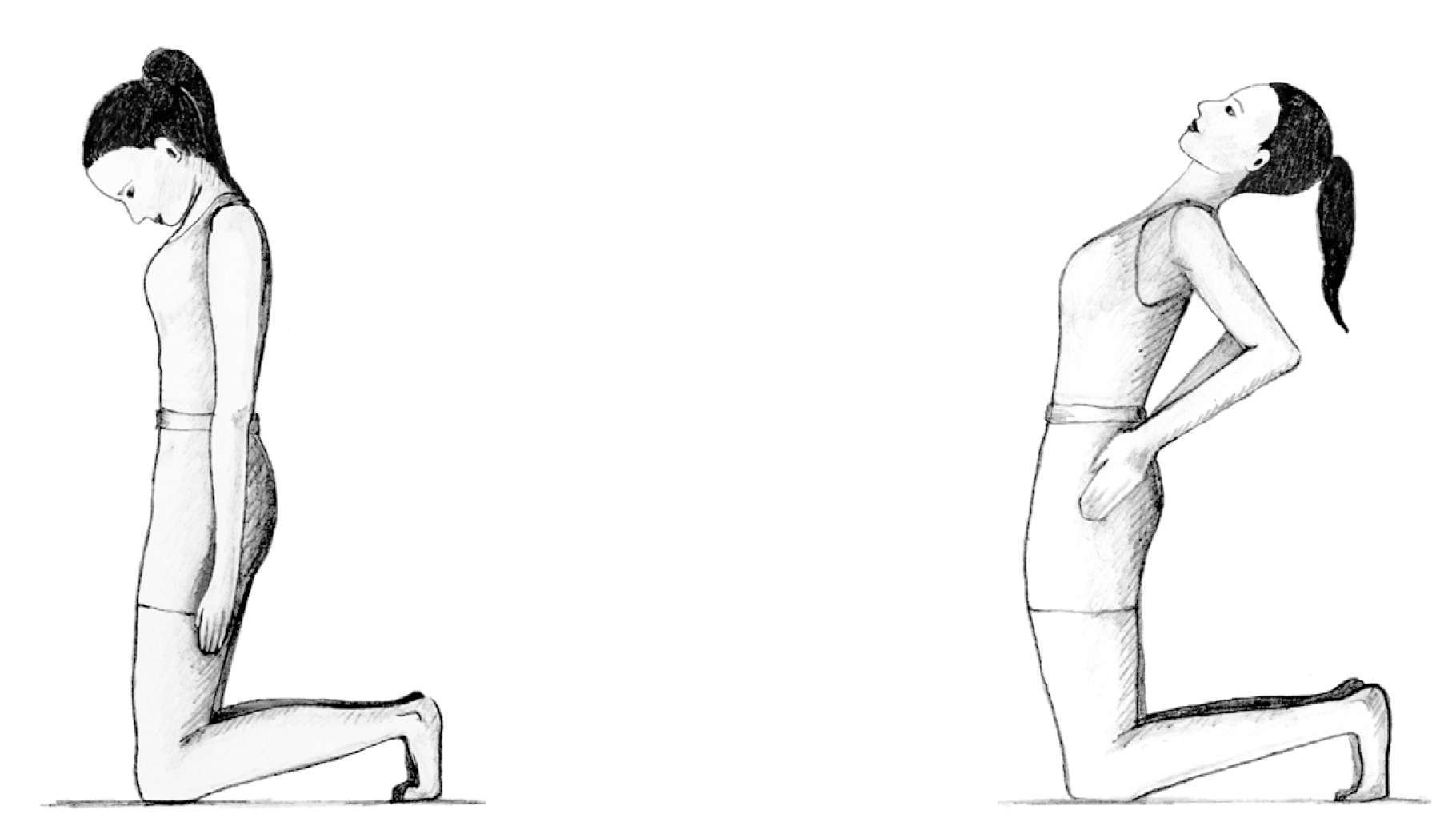
a) Kneel on the floor, with the body upright and the toes tucked under. The arms are let down and the hands are on the thighs. Incline the head forward tucking the chin against the chest.
b) Then tilt the head and neck back as far as possible. Simultaneously, incline backwards so that the spine arches, and move your hands to the hips to support the spine.
c) Take care of your breathing: breathe in deeply as you tilt your head back and arch the spine, and breathe out when you return to the initial position. During this exercise, the eyes are shut.
4. Lifting of the body
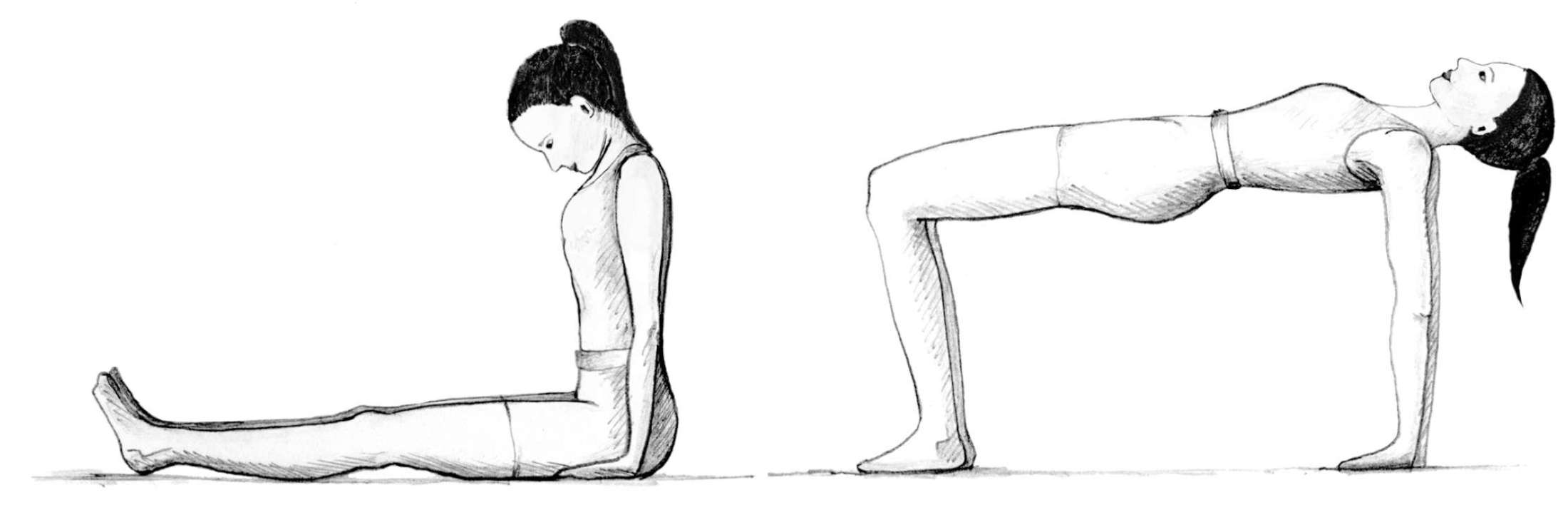
a) Sit on the floor with legs stretched out and feet around 30 cm apart. Let the arms down by your side, the palms are on the floor, the fingers closed and turned against the feet. Incline the head forward tucking the chin against the chest.
b) Tilt the head backward as far as possible, while raising the body so that the knees bend but the arms remain straight. The trunk is horizontal, while the arms and lower legs are vertical. In this position, every muscle should be tight. Return to the sitting position. Do not move your arms, hands and feet. Relax all the muscles and repeat the exercise.
c) The rhythm of breathing: as you raise the body breathe in deeply, hold the breath and strain the muscles; as you return to the sitting position breathe out slowly.
5. Folding in the lower back
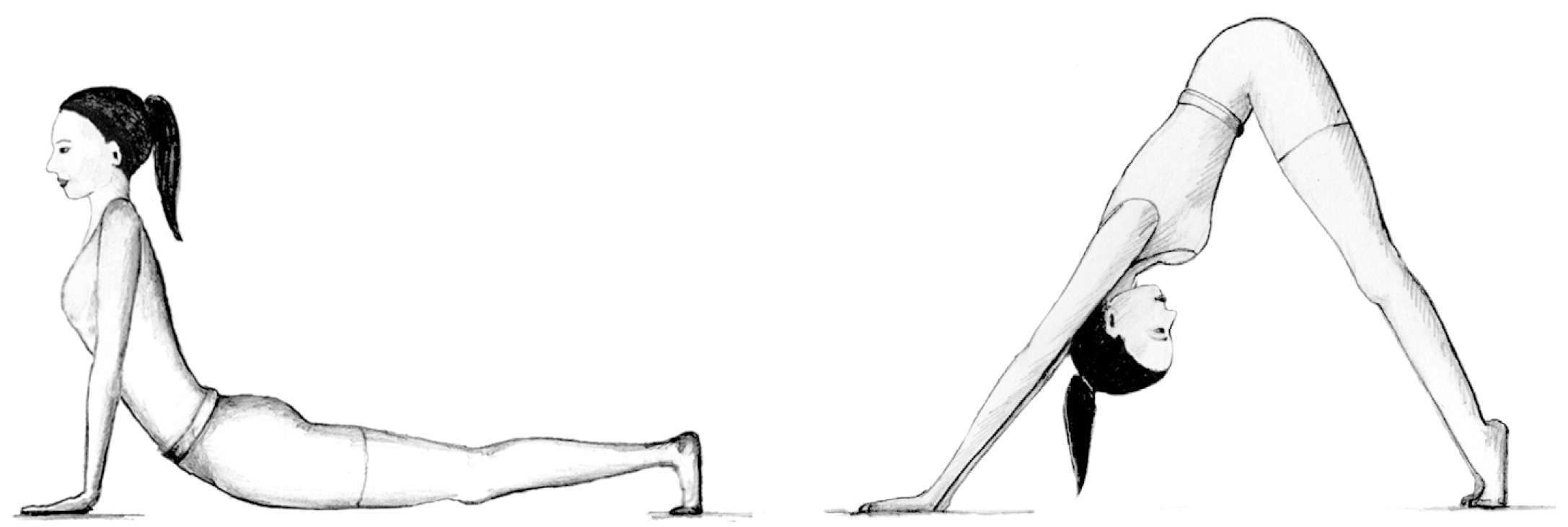
a) Face the floor, the body is straight and stretched out horizontally. Support yourself on the palms of straight arms and the balls of your feet. The hands and the feet are approximately 60 cm apart, the head is raised.
b) From this position, bring the body up into an inverted 'V', tuck in the chin against the chest, with the eyes looking at the knees.
c) Inhale as you raise the body, and exhale as you lower it.
6. Raising the energy
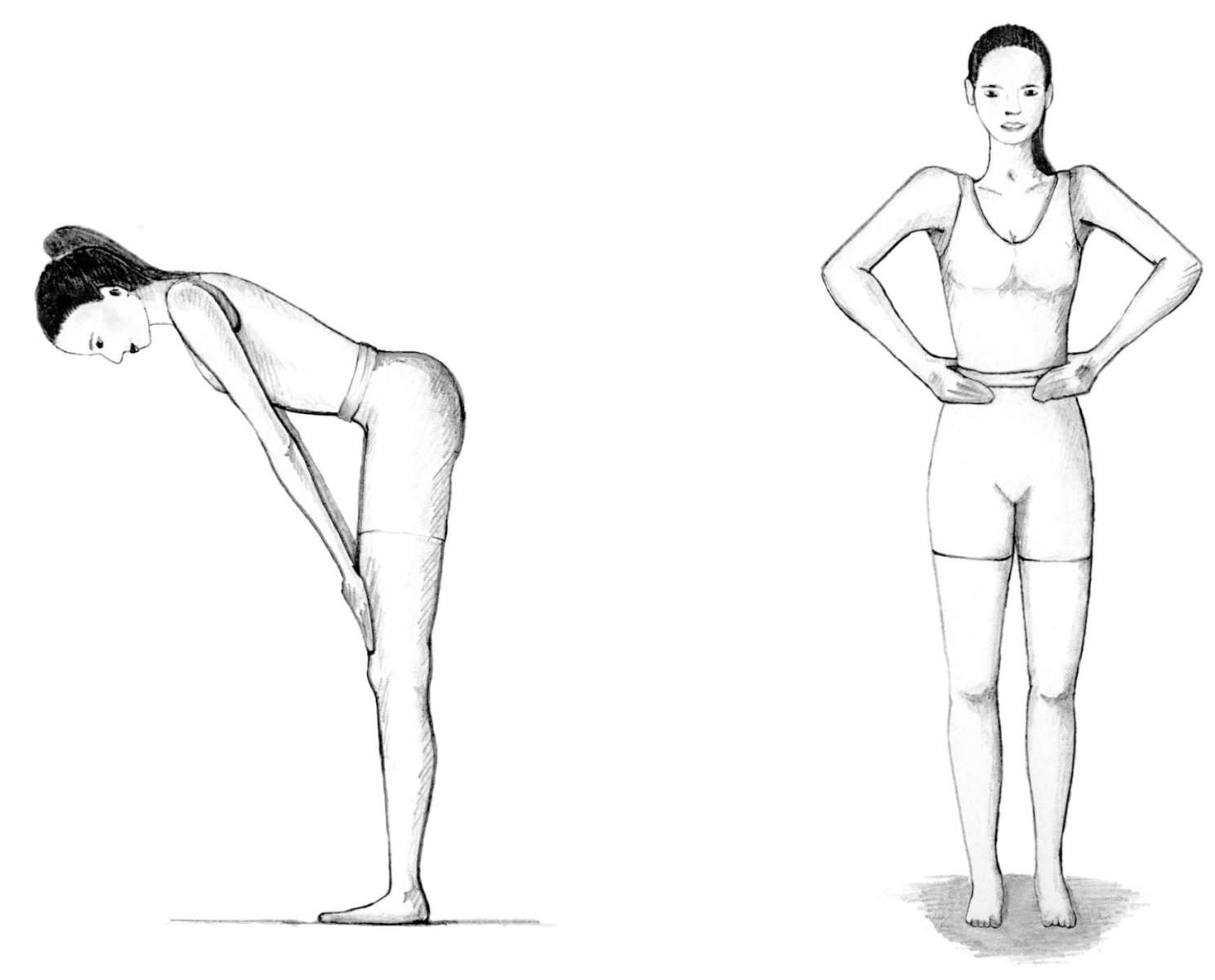
a) Stand up straight and slowly breathe out the air from the lungs: while exhaling, slowly bend over and put the hands on the knees. Squeeze out the last remaining air from the lungs.
b) Return to the upright position with empty lungs, put your hands on the hips and lift the shoulders. Pull the belly as much in as possible and jut out the chest.
c) Remain in this position, without air, as long as you can. When you are forced to take a breath, the air should only come into the empty lungs through the nose. When the lungs are full, exhale through the mouth and let the hands freely hang by the body. Then breathe in deeply and exhale through the mouth or the nose several times.
I do not recommend this exercise to beginners.