7.2.1.4. Smell
The olfactory system is also indispensable. The smell sensor detects gases, chemical substances from the environment, changes their presence, intensity and amount in the nasal cavity into body impulses, and transmits them via the olfactory nerve to the brain, where smells are registered. The nose is an organ with several functions; besides smelling, it also filters tiny particles from the air and adjusts the temperature of the inhaled air to the body temperature: in wintertime the air dries and warms up in it, while in the summer it gets more humid and cooler. Certain tasks of the nose are poorly investigated, like: how the nasal cavities close, one and the other, in turn, according to the activity of the brain hemispheres, i.e. what is this periodic cycle of alternating closing, etc.
The nose is exposed to the impact of all adverse substances we inhale with the air: it is the most sensitive to weather changes, to which the mucous membrane reacts with inflammation, which is why the nasal cavities must be maintained regularly. The latter is especially important because of the opening of the nasal canals, coordinated by brain activity, so it is no wonder that the Orient knows so many means of cleaning and maintaining the nose.
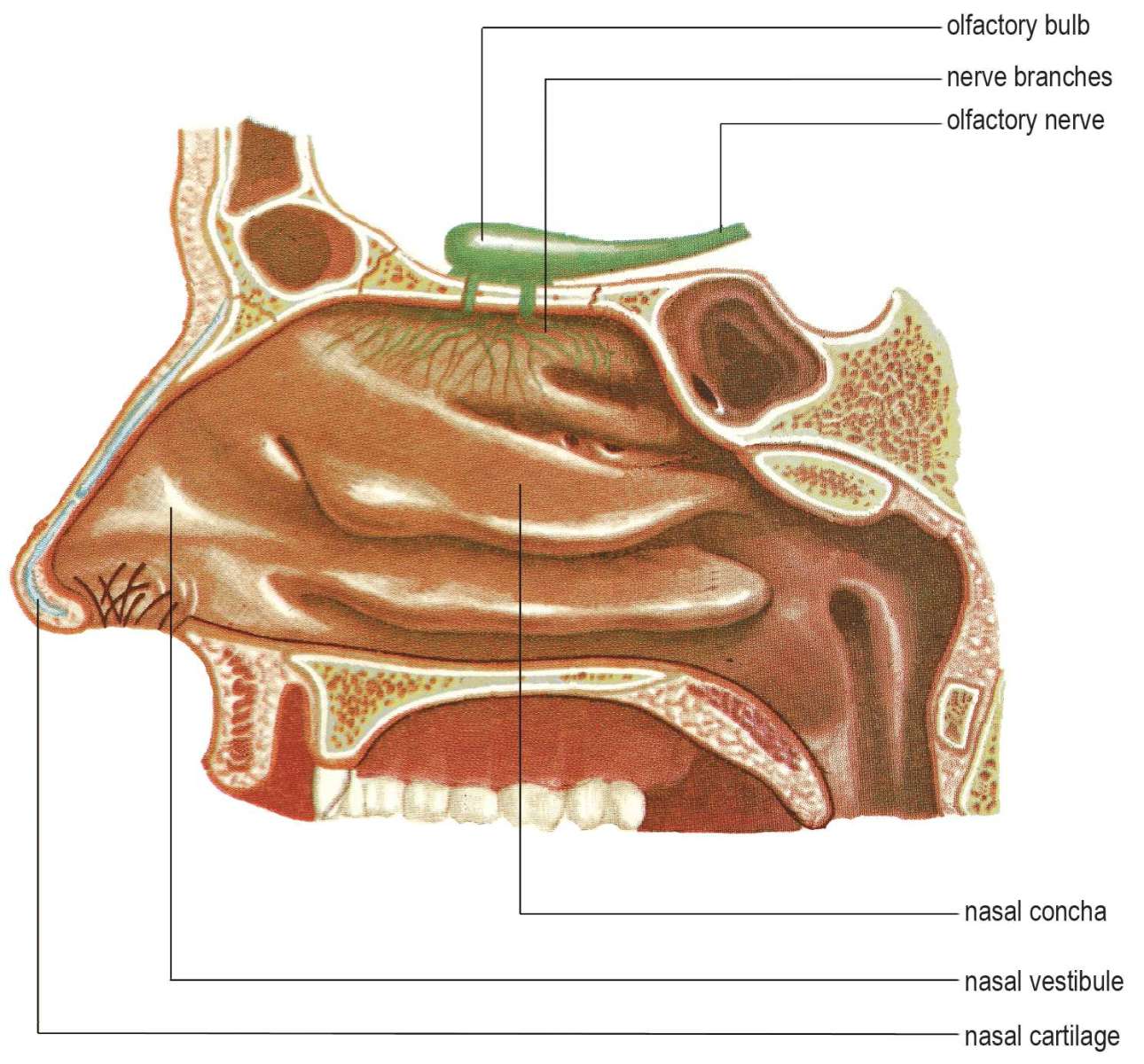
The olfactory nerves are located in the olfactory mucosa in the upper part of the nasal concha. All nerves are concentrated in the olfactory bulb, from where the olfactory nerve leads to the brain.
If the air does not circle through the nose, the sense of smell is interrupted. Therefore, we must learn to breathe through the nose, and if the nasal canals are narrowed, they must be expanded to make the breathing unhindered. We rinse the nasal canals with tepid and salty water by pouring the water into one and then into the other nasal canal by means of a special container prepared for this purpose. We pour the water into one canal so that it comes out of the other.
The sinus cavities require special treatment, since the pain caused by blocked sinuses is felt in the entire head, especially in the eyes.
When healing problems with smelling and breathing through the nose, therapists do the following two things: first, if the olfactory system does not have sufficient life energy, raise it with Rule IV, and second, if this is not successful, search for the organ that is without energy and cure it in the same way.
We advise the patient to learn to breathe through the nose and, if he catches a cold when the organism excretes adverse substances through the nose, to clean the nose with paper handkerchiefs and only use each handkerchief once; he should also frequently rinse the nose with tepid water.